

Common Mistakes in Plasmalogen Brain Health Protocol Implementation and Evidence-Based Solutions
Plasmalogens are specialized ether phospholipids that serve as the primary antioxidant defense in cell membranes, particularly within the brain and nervous system. Recent research indicates that plasmalogen levels naturally decline with age, a process that accelerates in neurodegenerative conditions. According to data from the National Institute on Aging, this decline is a critical factor in the progression of cognitive impairment and cellular aging. Understanding how to support these vital lipids is no longer optional for longevity seekers; it is a biological necessity for maintaining cognitive resilience and membrane integrity.
Mistake 1: Ignoring the Root Cause of Deficiency
Many individuals approach plasmalogen support as a simple supplementation issue. They buy a bottle of DHA or a generic phospholipid supplement and expect immediate cognitive clarity. This approach fails because it ignores the biological machinery required to produce or utilize these lipids. Plasmalogens are not just dietary components; they are synthesized through a complex metabolic pathway involving the liver, mitochondria, and peroxisomes.
If the underlying metabolic infrastructure is compromised, adding more raw materials will not restore levels. This is why understanding the difference between dietary intake and endogenous synthesis is critical. A person may have normal dietary fat intake but still suffer from severe plasmalogen deficiency due to enzymatic bottlenecks or genetic variations in lipid metabolism. The focus must shift from "adding more" to "enabling synthesis." This requires a holistic view of metabolic health, including liver function and mitochondrial efficiency. For a deeper understanding of how the body naturally produces these vital lipids, you can explore the complete science of biosynthesis detailed on our platform.
Mistake 2: Overlooking the Role of Peroxisomes
Peroxisomes are small organelles within cells that play a pivotal role in lipid metabolism. They are responsible for the initial steps of plasmalogen synthesis, specifically the creation of ether phospholipids. When peroxisomal function is impaired, the entire plasmalogen production line halts. This is not a minor detail; it is a fundamental biological constraint.
In severe inherited disorders, such as Zellweger spectrum disorders, peroxisomal dysfunction leads to a complete lack of plasmalogens, resulting in profound neurological and skeletal abnormalities. While most people do not have these severe genetic conditions, subclinical peroxisomal stress is common in aging populations. Factors like oxidative stress, heavy metal exposure, and chronic inflammation can impair peroxisomal activity. Ignoring this organelle means ignoring the factory floor where plasmalogens are built. Supporting peroxisomal health through antioxidants and specific nutrients is a prerequisite for any effective plasmalogen protocol. You can learn more about what plasmalogens are and their structural importance in cellular membranes.
Mistake 3: Neglecting Advanced Biomarker Testing
One of the most common errors in brain health protocols is operating in the dark. Many people rely on standard lipid panels or basic cognitive assessments to gauge their progress. These standard tests are designed to detect overt disease, not subtle metabolic shifts. A standard cholesterol panel will not reveal plasmalogen levels. It will not show oxidative stress in the brain or the integrity of the myelin sheath.
Advanced health measurement is changing how longevity is understood. It allows for the detection of early biological changes long before symptoms appear. Without specific biomarkers, you cannot know if your protocol is working. You might be taking high doses of supplements that are being oxidized before they can integrate into cell membranes. Advanced testing reveals patterns in lipid biology, inflammation, and cellular energy that standard medicine misses. For a comprehensive guide on why these measurements matter, read the importance of advanced health measurements in health and longevity.
Mistake 4: Inadequate Nutrient Cofactor Support
Plasmalogen synthesis requires a precise suite of cofactors. The body cannot produce these lipids in isolation. Key nutrients include choline, ethanolamine, vitamin B12, folate, and specific amino acids. A common mistake is focusing solely on the lipid itself while neglecting these essential building blocks. If you lack the cofactors, the synthesis pathway stalls, regardless of how much precursor you consume.
Choline, for example, is a direct precursor for the ethanolamine head group found in plasmalogens. Without adequate choline intake, the body cannot complete the structure. Similarly, vitamin B12 is critical for methylation processes that regulate lipid metabolism. Deficiencies in these micronutrients are widespread, particularly in older adults and those with gastrointestinal issues. Optimizing nutrient status is not just about adding more; it is about ensuring the biochemical environment is fertile for synthesis. For a detailed breakdown of the nutrients required, review critical nutrients and standards for optimal plasmalogen synthesis.
Mistake 5: Focusing Only on Synaptic Function
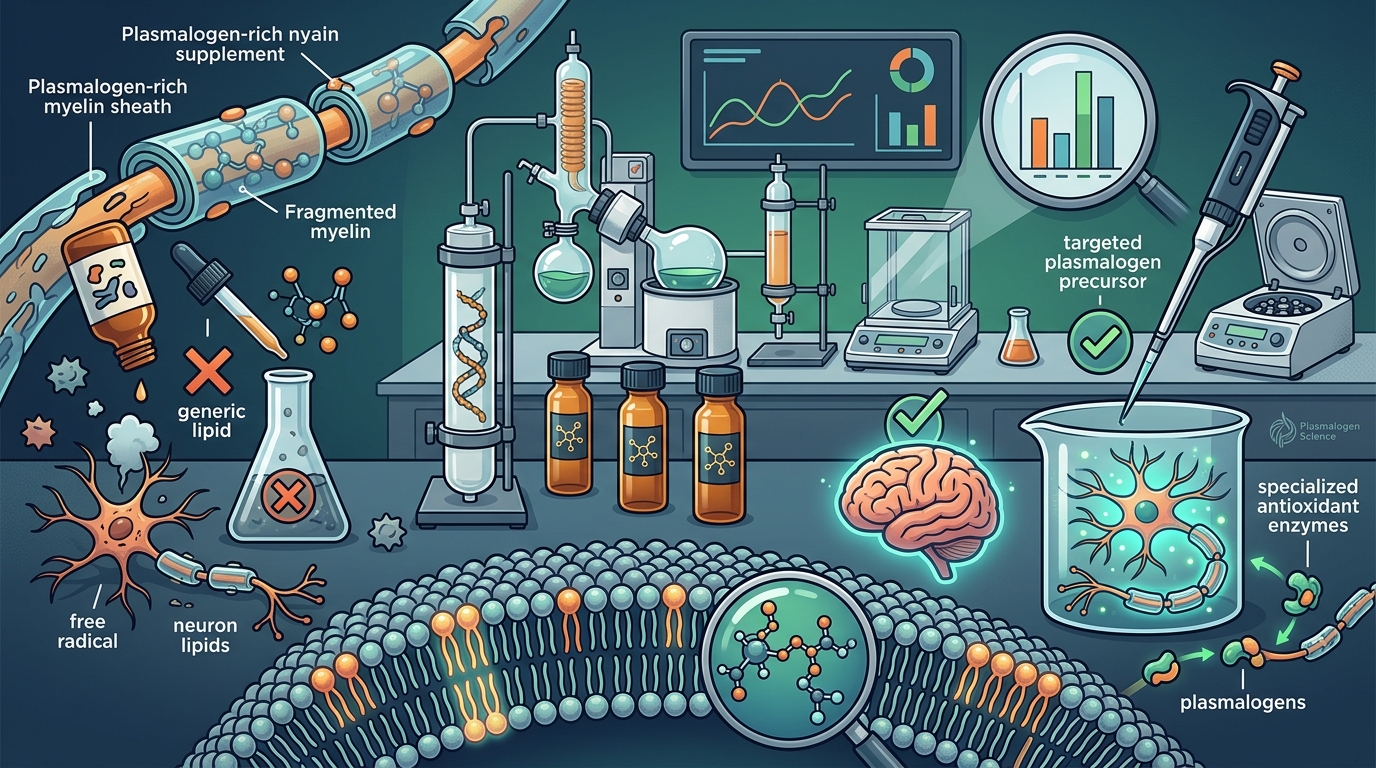
The brain is not just a collection of synapses. It is a complex organ with white matter, gray matter, and a vascular network. Plasmalogens are abundant in the myelin sheath, the protective covering of nerve fibers. Myelin is essential for the rapid transmission of electrical signals. When plasmalogen levels drop, myelin integrity is compromised, leading to slower neural processing and potential neurodegeneration.
Many protocols focus exclusively on synaptic plasticity and neurotransmitter balance, ignoring the structural integrity of the white matter. This is a critical oversight. Without healthy myelin, synaptic communication is inefficient. The brain's ability to process information rapidly diminishes. Supporting myelin health requires specific lipids that can integrate into the myelin sheath. Understanding how the myelin and white matter work in the brain is essential for a complete brain health strategy.
Mistake 6: Disregarding Systemic Inflammation
Plasmalogens act as sacrificial antioxidants. They absorb free radicals to protect the polyunsaturated fatty acids in cell membranes from peroxidation. When systemic inflammation is high, the demand for plasmalogens increases dramatically. They are consumed faster than they can be replaced. Ignoring inflammation while trying to boost plasmalogens is like trying to fill a bucket with a hole in the bottom.
Chronic inflammation drives oxidative stress, which depletes plasmalogen stores. This creates a vicious cycle: low plasmalogens lead to more oxidative stress, which leads to more inflammation, which further depletes plasmalogens. Breaking this cycle requires addressing the root causes of inflammation, such as gut health, insulin resistance, and environmental toxins. You cannot out-supplement a pro-inflammatory lifestyle. For insights into how plasmalogens influence aging and inflammation, explore how plasmalogens influence aging.
Mistake 7: Assuming Oral Supplementation is Sufficient Alone
While oral plasmalogen supplements are a valuable tool, they are not a magic bullet. The bioavailability of oral lipids depends on digestive health, bile production, and the integrity of the blood-brain barrier. If the gut is compromised, absorption is poor. If the blood-brain barrier is inflamed, the lipids cannot reach the brain tissue where they are needed most.
A comprehensive protocol must include strategies to enhance bioavailability and barrier integrity. This includes supporting gut health, reducing systemic inflammation, and potentially using targeted delivery mechanisms. It also involves lifestyle factors like sleep and stress management, which influence the blood-brain barrier's permeability. For a deeper dive into the specific mechanisms of how the synapse works in the brain, you can see why delivery to the right location is key.
Comparative Analysis of Protocol Approaches
To help you navigate the complexity of plasmalogen support, here is a comparison of common approaches and their efficacy based on current biological understanding.
| Approach | Mechanism | Efficacy | Key Considerations |
|---|---|---|---|
| Standard Lipid Panel Monitoring | Measures cholesterol and triglycerides | Low for Plasmalogens | Misses specific ether lipid levels; good for general heart health only. |
| High-Dose DHA Supplementation | Provides omega-3 fatty acids | Moderate | Supports membrane fluidity but does not directly replace plasmalogens; risk of oxidation if not balanced. |
| Advanced Biomarker Testing | Lipidomics and oxidative stress markers | High | Provides precise data on plasmalogen status and guides targeted intervention. |
| Peroxisomal Support | Antioxidants and cofactor optimization | High | Addresses the root cause of synthesis failure; essential for long-term resilience. |
| Isolated Plasmalogen Supplementation | Direct lipid replacement | Moderate to High | Effective if absorption is optimized; less effective if underlying inflammation is not managed. |
Key Takeaways
- Plasmalogens are specialized ether phospholipids that serve as the primary antioxidant defense in cell membranes, particularly within the brain and nervous system.
- Peroxisomal function is critical for the initial steps of plasmalogen synthesis; impairments here halt production regardless of dietary intake.
- Standard lipid panels are insufficient for monitoring plasmalogen health; advanced biomarker testing is required to detect early metabolic shifts.
- Nutrient cofactors like choline and B12 are essential building blocks; without them, endogenous synthesis cannot occur effectively.
- Myelin integrity depends on plasmalogens; low levels lead to compromised white matter and slower neural processing speeds.
- Systemic inflammation accelerates plasmalogen depletion by increasing oxidative stress and consuming these lipids as sacrificial antioxidants.
- Bioavailability is a major factor; gut health and blood-brain barrier integrity determine how much of the supplemented lipids reach the brain.
Frequently Asked Questions
What are plasmalogens and why are they important for brain health?
Plasmalogens are specialized ether phospholipids found in high concentrations in the brain and nervous system. They are important because they act as the primary antioxidant defense in cell membranes, protecting neural tissues from oxidative damage and supporting myelin integrity.
Can standard blood tests detect plasmalogen deficiency?
No, standard blood tests like lipid panels do not measure plasmalogen levels. They focus on cholesterol and triglycerides. Advanced lipidomics or specialized biomarker testing is required to assess plasmalogen status accurately.
How does aging affect plasmalogen levels?
Plasmalogen levels naturally decline with age. This decline is accelerated by oxidative stress and inflammation, leading to reduced membrane integrity and increased risk of neurodegenerative diseases.
What role do peroxisomes play in plasmalogen synthesis?
Peroxisomes are organelles responsible for the initial steps of plasmalogen synthesis. They create the ether linkage that defines plasmalogens. If peroxisomal function is impaired, plasmalogen production stops.
Are there specific nutrients needed to support plasmalogen production?
Yes, key nutrients include choline, ethanolamine, vitamin B12, folate, and specific amino acids. These cofactors are essential for the enzymatic pathways that synthesize plasmalogens.
How does inflammation impact plasmalogen levels?
Inflammation increases oxidative stress, which consumes plasmalogens as they act as sacrificial antioxidants. This depletion creates a cycle of further damage and reduced membrane resilience.
Is oral plasmalogen supplementation effective?
Oral supplementation can be effective, but its success depends on bioavailability. Factors like gut health, bile production, and blood-brain barrier integrity influence how much of the supplement reaches the brain.
Take Control of Your Cognitive Longevity
Implementing a plasmalogen brain health protocol is not about quick fixes. It is about understanding the complex biology of your cells and supporting them with precision. By avoiding these common mistakes and focusing on advanced measurement, peroxisomal health, and comprehensive nutrient support, you can build a resilient foundation for cognitive aging.
Ready to optimize your protocol? Visit our contact page to discuss your specific needs or explore our Learning Hub for more in-depth scientific resources.