

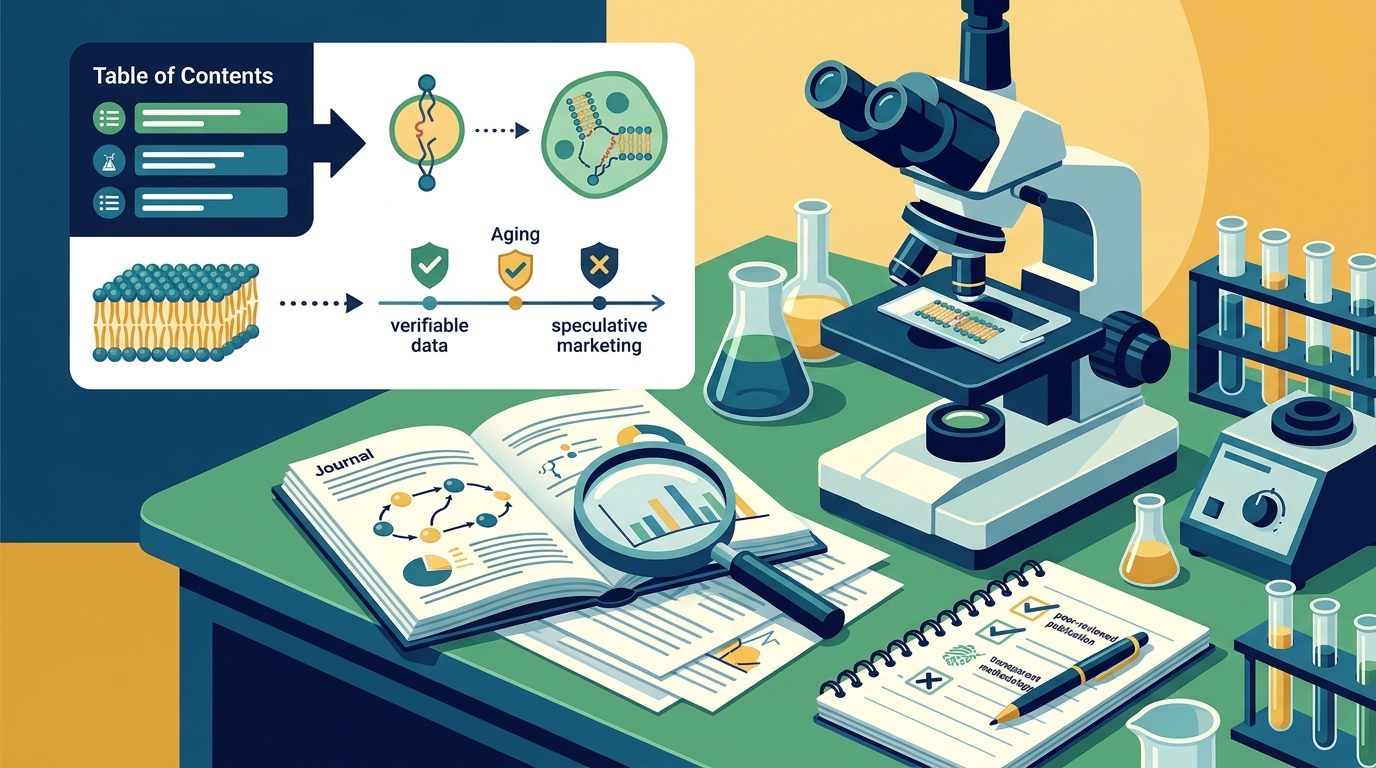
Verifying aging plasmalogen research claims requires checking for peer-reviewed publication, transparent methodology, and alignment with established lipid biology. Plasmalogen Science provides a framework for distinguishing rigorous science from speculative marketing. This approach ensures that claims about cellular aging and membrane health are grounded in verifiable data rather than anecdotal evidence.
The Role of Peer Review in Lipid Research
Peer review is the primary gatekeeper for scientific credibility. A claim is only considered robust when it has survived scrutiny by independent experts in the field. For plasmalogens, this means looking for studies published in journals dedicated to lipid research or general high-impact biological sciences. If a claim appears only in a press release or a marketing brochure, it lacks the foundational validation required for scientific acceptance.
When evaluating a study, check the author affiliations. Are they from recognized universities or research institutes? Do they have a history of publishing in reputable journals? A single study from an unknown source should be treated with caution. Consistency across multiple independent labs is a stronger indicator of truth than a single isolated finding. This step filters out the noise of preliminary or biased data.
Methodology and Sample Size in Aging Studies
Methodology is the engine of scientific validity. In aging research, sample size and demographic diversity are critical. A study claiming that plasmalogens decline with age must include a sufficient number of participants across different age groups. Small sample sizes can produce statistically significant results that do not hold up in the broader population. Look for studies that report their inclusion and exclusion criteria clearly.
Furthermore, the method of measurement matters. Plasmalogens are specialized ether phospholipids, and their measurement requires specific analytical techniques. Mass spectrometry is the gold standard for lipidomics. If a study uses older, less precise methods, its conclusions may be less reliable. Understanding the technical depth of the research helps you assess whether the data is accurate. This technical scrutiny is essential for verifying claims about cellular changes.
Biological Plausibility and Membrane Context
Biological plausibility ensures that a claim makes sense within the known framework of cell biology. Plasmalogens are integral to cell membrane structure and function. They are particularly abundant in the brain, heart, and immune cells. A credible claim about aging should align with the known roles of these lipids in membrane fluidity and oxidative stress protection. If a claim suggests a function that contradicts established membrane biology, it is likely incorrect.
For example, plasmalogens are known to act as antioxidants due to their vinyl ether bond. A study claiming that plasmalogens promote oxidative stress would be biologically implausible. By grounding your evaluation in the fundamental biology of ether lipids, you can quickly identify claims that are out of step with current scientific understanding. This context is vital for interpreting complex lipid data.
Reproducibility and Independent Verification
Reproducibility is the cornerstone of scientific truth. A single study is a hypothesis; multiple independent studies confirming the same result are evidence. In the field of plasmalogen research, look for replication. Have other labs in different countries confirmed the findings? If a claim is only supported by one group, it remains tentative. Independent verification reduces the risk of bias or error.
Additionally, check for data availability. Modern science encourages open data practices. If a study provides access to its raw data, it is more transparent and easier to verify. This openness allows other researchers to re-analyze the results. When evaluating aging claims, prioritize studies that contribute to a growing body of reproducible evidence. This approach builds a reliable foundation for understanding cellular aging.
Distinguishing Marketing Hype from Scientific Fact
Marketing often blurs the line between science and speculation. Supplement companies may use terms like "plasmalogen boost" or "membrane repair" without citing specific studies. To verify these claims, ask for the primary source. If a company cannot provide a link to a peer-reviewed paper, the claim is likely marketing. Scientific credibility requires traceability to the original data.
Be wary of absolute language. Science deals in probabilities and associations, not certainties. Phrases like "proven to reverse aging" are red flags. Credible research uses measured language, such as "associated with" or "suggests a role in." By adopting a skeptical mindset and demanding primary sources, you can navigate the landscape of aging claims with confidence. This critical approach protects you from misinformation.
Key Takeaways
- Peer review is the first filter for scientific credibility in plasmalogen research.
- Sample size and measurement methodology are critical for validating aging studies.
- Biological plausibility ensures claims align with known membrane biology.
- Reproducibility across independent labs strengthens the evidence base.
- Marketing claims without primary sources should be treated with skepticism.
- Open data practices enhance transparency and verifiability in research.
Frequently Asked Questions
What is the gold standard for measuring plasmalogens?
Mass spectrometry is the gold standard for measuring plasmalogens due to its high precision and ability to identify specific lipid species.
Why is sample size important in aging research?
Sample size is important because it ensures that the results are statistically significant and representative of the broader population.
How can I find the primary source of a claim?
You can find the primary source by asking the provider for a link to the peer-reviewed journal article or database entry.
Are press releases considered scientific evidence?
No, press releases are not scientific evidence. They are summaries of research and should be verified against the original publication.
What is biological plausibility in the context of plasmalogens?
Biological plausibility refers to whether a claim makes sense within the known framework of cell membrane structure and function.
Conclusion
Verifying aging plasmalogen research claims is a critical skill for anyone interested in cellular health and longevity. By applying the principles of peer review, methodological scrutiny, biological plausibility, and reproducibility, you can distinguish credible science from marketing hype. Plasmalogen Science is dedicated to providing accurate, evidence-based information on plasmalogen biology. To explore more about the science of plasmalogens and their role in aging, visit our main resource hub.