

Plasmalogens vs. Regular Phospholipids: Membrane Structure Comparison
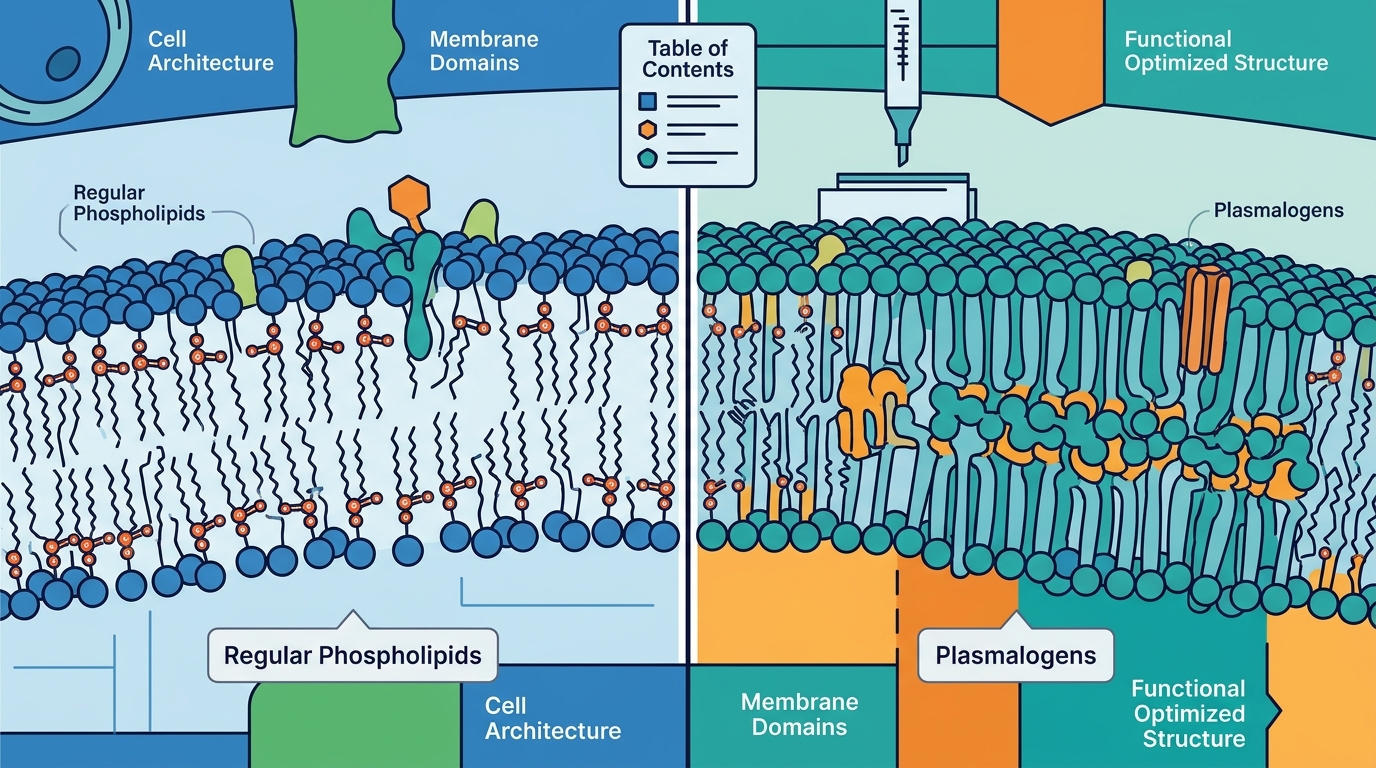
Plasmalogens organize cell membranes more effectively than regular phospholipids due to their unique vinyl ether bond. This structural difference allows plasmalogens to create distinct membrane domains that regular phospholipids cannot replicate. Plasmalogen Science provides detailed resources on how these specialized lipids influence cellular architecture and function.
Plasmalogens: The Specialized Ether Lipid
Plasmalogens are a unique class of ether phospholipids found in cellular membranes throughout the body. Unlike standard phospholipids, plasmalogens contain a distinctive vinyl ether bond at the sn-1 position of the glycerol backbone. This seemingly small structural difference gives plasmalogens extraordinary biological properties that regular phospholipids lack.
Plasmalogens are especially concentrated in brain tissue, cardiac muscle, immune cells, and skeletal muscle. In some tissues, plasmalogens account for up to 20% of total phospholipids. Their presence is not random; they are strategically located in areas with high metabolic and membrane demands. This distribution suggests a specific functional role in maintaining membrane integrity under stress.
Strengths in Membrane Organization
The vinyl ether bond in plasmalogens acts as a sacrificial antioxidant, helping protect cells from oxidative stress and lipid peroxidation. This antioxidant capacity is a major strength that regular phospholipids do not possess to the same degree. By neutralizing reactive oxygen species, plasmalogens help maintain the structural integrity of the membrane over time.
Plasmalogens also influence membrane fluidity and flexibility. Their molecular shape and chemical properties allow them to pack differently within the lipid bilayer compared to regular phospholipids. This differential packing can create specialized membrane domains that facilitate specific cellular processes, such as signal transduction and vesicle fusion.
Limits and Considerations
While plasmalogens offer unique advantages, they are not a replacement for regular phospholipids. They work in concert with other lipid classes to form a functional membrane. The production of plasmalogens is a complex, multi-step process involving both peroxisomes and the endoplasmic reticulum. This complexity means that plasmalogen levels can be sensitive to metabolic health and peroxisomal function.
Regular Phospholipids: The Standard Membrane Component
Regular phospholipids are the most abundant lipids in cell membranes. They are characterized by ester bonds at both the sn-1 and sn-2 positions of the glycerol backbone. This standard structure allows them to form the basic lipid bilayer that defines the boundary of every cell.
Regular phospholipids provide the foundational structure for membrane organization. They create the hydrophobic core and hydrophilic heads that separate the inside of the cell from the outside environment. While they lack the specific antioxidant properties of plasmalogens, they are essential for the basic mechanical stability of the membrane.
Strengths in Membrane Organization
Regular phospholipids are highly versatile and can be rapidly synthesized and remodeled. This flexibility allows cells to adjust their membrane composition in response to changing environmental conditions. They are the primary drivers of membrane fluidity, ensuring that the membrane remains dynamic and responsive.
The abundance of regular phospholipids allows them to form large, continuous membrane domains. These domains provide a stable platform for membrane proteins and other cellular components. Without regular phospholipids, the membrane would lack the basic structural integrity required for cellular life.
Limits and Considerations
Regular phospholipids are more susceptible to oxidative damage than plasmalogens. The ester bonds in regular phospholipids are more vulnerable to attack by reactive oxygen species, which can lead to lipid peroxidation and membrane damage. This vulnerability is a significant limitation in environments with high oxidative stress.
Structural Comparison Table
| Criteria | Plasmalogens | Regular Phospholipids |
|---|---|---|
| Chemical Bond at sn-1 | Vinyl Ether Bond | Ester Bond |
| Antioxidant Capacity | High (Sacrificial Antioxidant) | Low (Susceptible to Oxidation) |
| Membrane Fluidity Influence | Creates Specialized Domains | Provides Baseline Fluidity |
| Biosynthesis Pathway | Peroxisomal and ER | Primarily ER |
| Tissue Concentration | High in Brain, Heart, Muscle | Ubiquitous in All Membranes |
| Role in Oxidative Stress | Protective | Vulnerable |
How They Differ in Membrane Organization
The primary difference between plasmalogens and regular phospholipids lies in their ability to modulate membrane physical properties. Plasmalogens, with their vinyl ether bond, tend to pack more tightly than regular phospholipids. This tighter packing can reduce membrane fluidity in specific regions, creating ordered domains that are distinct from the surrounding disordered lipid environment.
These ordered domains are crucial for organizing membrane proteins and facilitating specific signaling events. Regular phospholipids, by contrast, tend to form more fluid, disordered regions. The interplay between these two types of lipids allows the membrane to have both stability and flexibility. This balance is essential for cellular function, particularly in tissues like the brain where membrane dynamics are critical for synaptic transmission.
Research has shown that altered plasmalogen levels can disrupt this balance. In conditions like Alzheimer's disease, plasmalogens are decreased in the brain and serum, which may contribute to membrane dysfunction and neurodegeneration. This highlights the importance of plasmalogens in maintaining healthy membrane organization, particularly in the nervous system.
Choosing the Right Lens for Your Research
Choose plasmalogens if your research focuses on oxidative stress, membrane protection, or specialized membrane domains. They are the key players in protecting cells from oxidative damage and organizing specific signaling platforms. If you are studying brain health, cardiovascular function, or aging, plasmalogens are a critical component to consider. according to Membrane phospholipid synthesis
Choose regular phospholipids if your research focuses on basic membrane structure, fluidity, or general cellular boundary function. They are the foundational building blocks of all cell membranes and are essential for understanding the basic mechanics of membrane organization. If you are studying membrane permeability, basic transport, or general lipid bilayer physics, regular phospholipids are the primary focus. according to Membrane plasmalogen composition
For a comprehensive understanding of membrane organization, it is best to consider both. They work together to create a dynamic, functional membrane. Plasmalogen Science offers resources that explore the interplay between these two lipid classes, providing a deeper insight into cellular biology.
Frequently Asked Questions
Can regular phospholipids replace plasmalogens in membrane structure?
No, regular phospholipids cannot fully replace plasmalogens. While they provide basic structural support, they lack the specific antioxidant properties and domain-forming capabilities of plasmalogens. This difference is crucial for protecting cells from oxidative stress and organizing specific membrane functions.
How does the vinyl ether bond affect membrane fluidity?
The vinyl ether bond in plasmalogens allows them to pack more tightly than regular phospholipids. This tighter packing can reduce local membrane fluidity, creating ordered domains that are distinct from the surrounding lipid environment. This property is essential for organizing membrane proteins and facilitating specific signaling events.
Are plasmalogens found in all cell types?
Plasmalogens are found in almost all mammalian tissues, but their concentration varies. They are especially concentrated in the brain, heart, and skeletal muscle. In some tissues, they account for up to 20% of total phospholipids, while in others, they are present in lower amounts.
What happens when plasmalogen levels are low?
Low plasmalogen levels can lead to increased oxidative stress and membrane damage. This can affect cellular function, particularly in tissues with high metabolic demands like the brain. Reduced plasmalogen levels have been associated with aging and various chronic diseases, including Alzheimer's disease.
How are plasmalogens measured in research?
Plasmalogens can be measured using advanced lipidomics techniques. These methods allow researchers to quantify specific plasmalogen species and assess their distribution within different tissues or cell types. This measurement is crucial for understanding the role of plasmalogens in health and disease. according to Potential Role of