

Evaluating Plasmalogen Types for Optimal Synaptic Vesicle Fusion Performance
Synaptic vesicle fusion is the fundamental event that allows neurons to communicate. This process relies heavily on the lipid composition of the presynaptic membrane. Research indicates that plasmalogens, a specific class of ether phospholipids, are critical for maintaining the membrane curvature and fluidity required for efficient neurotransmitter release. Without adequate plasmalogen levels, the speed and accuracy of synaptic transmission can decline, impacting cognitive function and neural health.
What Are Plasmalogens?
Plasmalogens are a unique subclass of phospholipids characterized by a vinyl-ether linkage at the sn-1 position of the glycerol backbone. This chemical structure distinguishes them from standard diacyl phospholipids, which have an ester linkage at the same position. The vinyl-ether bond makes plasmalogens highly susceptible to oxidation, which serves a protective role by sacrificing the lipid to neutralize free radicals before they damage more critical cellular components.
Plasmalogens are found in high concentrations in the brain, heart, and skeletal muscle. In the brain, they are particularly abundant in the myelin sheath and synaptic membranes. This distribution suggests a specialized role in neural signaling and membrane integrity. The body synthesizes plasmalogens in the peroxisomes, a cellular organelle responsible for breaking down very long-chain fatty acids and synthesizing ether lipids. Disruptions in peroxisomal function can lead to severe deficiencies in plasmalogen production.
Understanding the biology of these lipids requires looking at their structural impact. Plasmalogens are not merely structural fillers. They actively participate in membrane dynamics, influencing how proteins embedded in the membrane function. This is especially true for the proteins involved in synaptic vesicle fusion, which must undergo rapid conformational changes to release neurotransmitters.
The Synaptic Fusion Mechanism
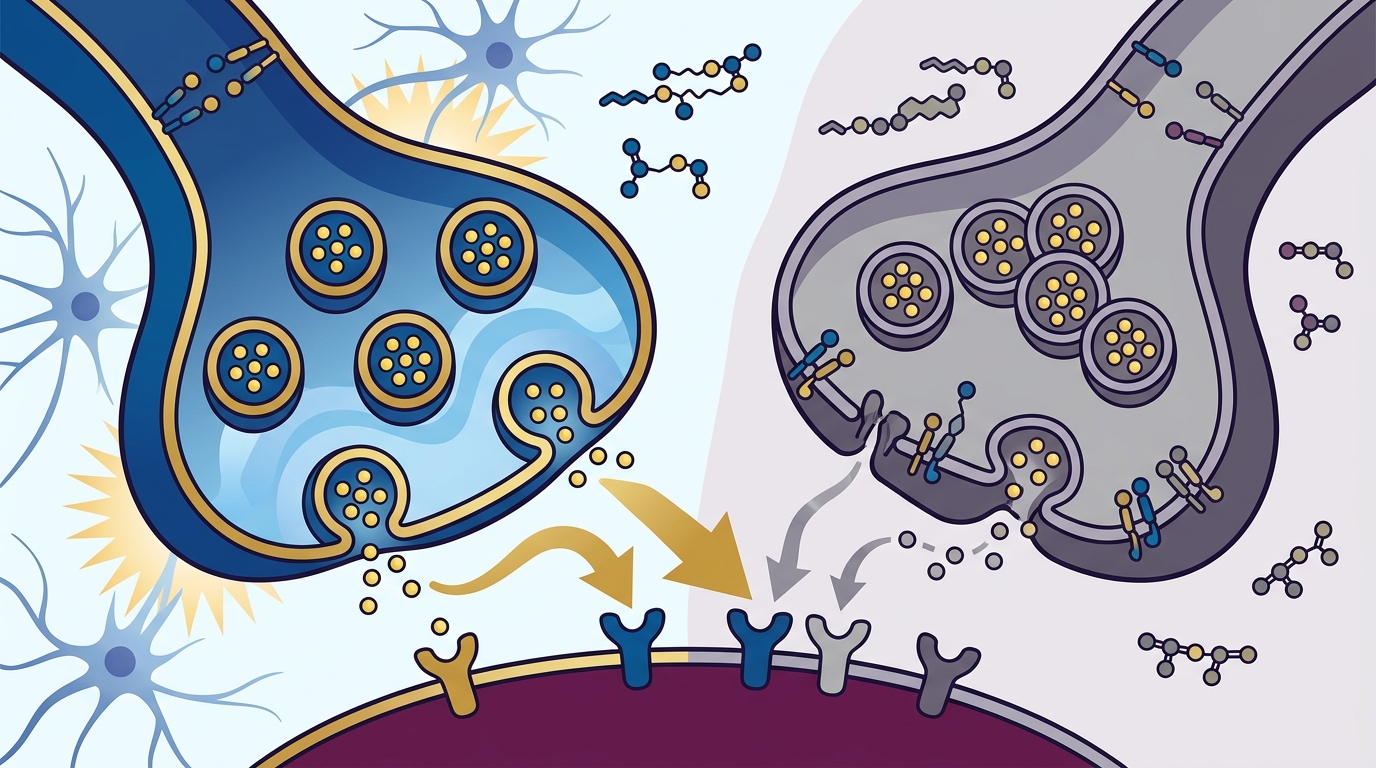
Synaptic vesicle fusion is the process by which neurotransmitters are released from the presynaptic neuron into the synaptic cleft. This event is triggered by an influx of calcium ions. The vesicles, which are small spherical structures containing neurotransmitters, must dock at the presynaptic membrane and then merge with it to release their contents.
The membrane surrounding the synaptic vesicle and the presynaptic terminal must be highly flexible. It needs to bend, curve, and fuse without breaking. This is where plasmalogens play a crucial role. Their unique conical shape promotes negative membrane curvature, which is essential for the formation of the fusion pore. A fusion pore is the initial connection point between the vesicle and the membrane that allows neurotransmitters to escape.
When plasmalogen levels are optimal, the membrane maintains the necessary fluidity and curvature stress to support rapid fusion events. This ensures that neurotransmission is fast and precise. If the membrane becomes too rigid or lacks the appropriate lipid composition, the fusion process can slow down. This delay can impair synaptic plasticity, which is the brain's ability to strengthen or weaken synapses over time. Synaptic plasticity is the basis of learning and memory.
The efficiency of this mechanism depends on the interaction between lipids and fusion proteins. Proteins such as SNARE complexes (Soluble N-ethylmaleimide-sensitive factor Attachment protein REceptors) are responsible for bringing the vesicle and membrane together. These proteins require a specific lipid environment to function correctly. Plasmalogens provide this environment by modulating the local membrane properties.
Plasmalogen Subtypes and Specificity
Not all plasmalogens are identical. They are classified based on the fatty acid chains attached to the sn-2 position of the glycerol backbone. The two primary types relevant to neural health are ethanolamine plasmalogens (PlasEtn) and choline plasmalogens (PlasCho).
PlasEtn is the most abundant plasmalogen subtype in the brain. It is particularly concentrated in the white matter and synaptic terminals. The fatty acid chain in PlasEtn is often docosahexaenoic acid (DHA), a long-chain omega-3 fatty acid. DHA is known for its role in maintaining membrane fluidity and reducing inflammation. The combination of the vinyl-ether bond and DHA makes PlasEtn highly effective at protecting synaptic membranes from oxidative stress.
PlasCho, on the other hand, is more commonly associated with cell signaling and membrane repair. While less abundant in the brain than PlasEtn, it still plays a vital role in maintaining the overall lipid balance. The ratio of PlasEtn to PlasCho can influence the physical properties of the membrane. A higher ratio of PlasEtn is generally associated with greater membrane flexibility and better support for synaptic vesicle fusion.
Evaluating plasmalogen types requires looking at their specific contributions to membrane dynamics. PlasEtn is critical for the structural integrity of the synaptic vesicle itself. It helps maintain the curvature necessary for the vesicle to form and fuse. PlasCho contributes to the stability of the presynaptic membrane and the regulation of signaling pathways that control neurotransmitter release.
The balance between these subtypes is dynamic. It changes in response to dietary intake, metabolic health, and aging. As we age, plasmalogen levels naturally decline. This decline is often more pronounced in the brain, leading to reduced synaptic efficiency and increased vulnerability to neurodegenerative diseases. Maintaining the correct balance of plasmalogen subtypes is therefore essential for long-term neural health.
Evaluation Metrics for Fusion Performance
Assessing the impact of plasmalogen types on synaptic vesicle fusion involves several key metrics. These metrics help researchers and clinicians understand how well the synaptic machinery is functioning. One primary metric is the rate of neurotransmitter release. This can be measured using electrophysiological techniques that record the electrical activity of neurons.
Another important metric is the size and shape of synaptic vesicles. Plasmalogen deficiency can lead to abnormal vesicle morphology, which can impair their ability to fuse with the membrane. Imaging techniques such as electron microscopy allow for the detailed examination of vesicle structure. These images can reveal changes in vesicle density, size, and distribution.
Oxidative stress markers are also critical evaluation metrics. Since plasmalogens act as antioxidants, their levels can indicate the oxidative burden on the synaptic membrane. High levels of lipid peroxidation products suggest that plasmalogens are being depleted by oxidative damage. This depletion can compromise the membrane's ability to support fusion events.
Longitudinal tracking of plasmalogen levels provides insight into the long-term health of the synaptic network. By monitoring changes in plasmalogen subtypes over time, researchers can identify patterns associated with cognitive decline or neural recovery. This approach is more informative than single-time point measurements, as it captures the dynamic nature of lipid metabolism.
Advanced health measurement techniques are increasingly being used to evaluate these metrics. These techniques include lipidomics, which allows for the comprehensive profiling of lipid species in biological samples. Lipidomics can identify specific plasmalogen subtypes and their fatty acid compositions. This level of detail is essential for understanding the specific role of each plasmalogen type in synaptic function.
Comparative Analysis of Lipid Roles
To understand the unique contribution of plasmalogens, it is helpful to compare them with other membrane lipids. The table below summarizes the roles of different lipid classes in synaptic function.
| Lipid Class | Primary Role in Synapse | Impact on Vesicle Fusion | Deficiency Consequence |
|---|---|---|---|
| Plasmalogens (PlasEtn) | Membrane curvature and antioxidant protection | Promotes fusion pore formation and stability | Reduced neurotransmitter release speed |
| Phosphatidylcholine | General membrane structure and signaling | Provides bulk membrane integrity | Membrane rigidity and impaired signaling |
| Cholesterol | Membrane fluidity and raft formation | Regulates protein mobility in the membrane | Disrupted lipid raft organization |
| Sphingomyelin | Membrane stability and apoptosis regulation | Stabilizes the outer leaflet of the membrane | Increased membrane permeability |
As shown in the table, plasmalogens have a distinct role in promoting the physical changes required for fusion. While other lipids provide structural support, plasmalogens actively facilitate the dynamic processes of synaptic transmission. This makes them indispensable for optimal neural performance.
Key Takeaways
- Plasmalogens are ether phospholipids with a vinyl-ether bond that protects synaptic membranes from oxidative stress.
- Synaptic vesicle fusion requires specific membrane curvature, which is promoted by the conical shape of plasmalogens.
- PlasEtn is the primary plasmalogen subtype in the brain, often containing DHA to enhance membrane fluidity.
- Evaluation of fusion performance includes measuring neurotransmitter release rates, vesicle morphology, and oxidative stress markers.
- Advanced lipidomics provides detailed insights into plasmalogen subtypes and their fatty acid compositions.
- Aging leads to a natural decline in plasmalogen levels, which can impair synaptic efficiency and cognitive function.
- Maintaining plasmalogen levels through diet and lifestyle is crucial for long-term neural health and resilience.
Frequently Asked Questions
What is the primary function of plasmalogens in the brain?
Plasmalogens play a critical role in maintaining the structural integrity and fluidity of neuronal membranes. They are essential for synaptic vesicle fusion, which is necessary for neurotransmitter release and neural communication.
How do plasmalogens support synaptic vesicle fusion?
Plasmalogens promote negative membrane curvature, which is required for the formation of the fusion pore. This allows synaptic vesicles to merge with the presynaptic membrane and release neurotransmitters efficiently.
What is the difference between PlasEtn and PlasCho?
PlasEtn (ethanolamine plasmalogen) is more abundant in the brain and is closely linked to antioxidant protection and membrane curvature. PlasCho (choline plasmalogen) is more involved in cell signaling and membrane repair.
Can plasmalogen levels be measured in the body?
Yes, plasmalogen levels can be measured through blood tests and lipidomics analysis. These tests can identify specific plasmalogen subtypes and their fatty acid compositions, providing insight into neural health.
Why are plasmalogens considered antioxidants?
The vinyl-ether bond in plasmalogens is highly susceptible to oxidation. This allows them to neutralize free radicals and protect other cellular components from oxidative damage.
How does aging affect plasmalogen levels?
Plasmalogen levels naturally decline with age. This decline is associated with reduced synaptic efficiency, increased oxidative stress, and a higher risk of neurodegenerative diseases.
What are the signs of low plasmalogen levels?
Signs may include cognitive decline, memory issues, reduced neural plasticity, and increased susceptibility to oxidative stress. Advanced health measurements can help identify these patterns early.
Optimize Your Neural Health
Understanding the role of plasmalogens in synaptic function is the first step toward supporting long-term brain health. By evaluating plasmalogen types and their impact on vesicle fusion, you can make informed decisions about your nutritional and lifestyle choices. Prioritizing the maintenance of healthy plasmalogen levels can help preserve synaptic efficiency and cognitive resilience.
For more information on plasmalogen science and advanced health measurements, visit our home page. Explore our resources on advanced health measurements to learn how to monitor your biomarkers. Discover the details of cognitive and neurological systems and how they are affected by lipid biology. Learn about bone and muscle health in the context of plasmalogen deficiency. Read our guide on synapse function to deepen your understanding of neural communication. Contact us at Plasmalogen Science for more information.