

Plasmalogens are specialized ether phospholipids that serve as critical components of cell membranes, particularly in the brain, heart, and immune system. Recent research into advanced health measurements indicates that plasmalogen levels naturally decline with age, which is linked to reduced cellular resilience and increased oxidative stress. Understanding how the body produces these vital molecules and what nutrients support their production is essential for maintaining long-term health and longevity.
What Are Plasmalogens?
Plasmalogens are a unique class of phospholipids characterized by a vinyl-ether bond at the sn-1 position of the glycerol backbone. This chemical structure distinguishes them from other phospholipids like phosphatidylcholine or phosphatidylethanolamine. Plasmalogens are essential for maintaining membrane fluidity, protecting cells from oxidative damage, and facilitating signal transduction.
These molecules are found in high concentrations in the myelin sheath of nerve cells, the heart muscle, and the immune system. They play a crucial role in how cells communicate and respond to stress. When plasmalogen levels drop, cellular function can be compromised, leading to increased vulnerability to disease and accelerated aging.
For a deeper understanding of their structure and function, you can explore What Are Plasmalogens on our learning hub.
The Biosynthesis Pathway
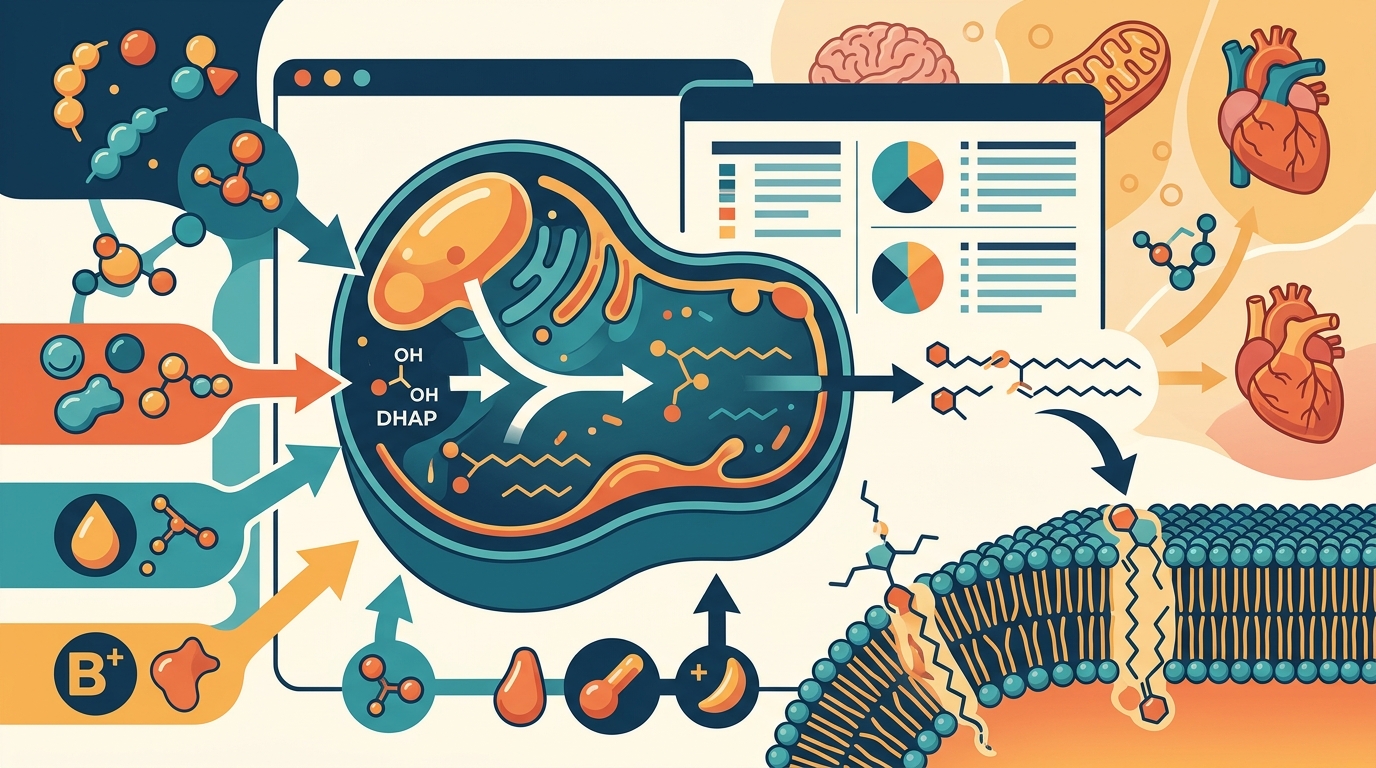
The production of plasmalogens is a complex, multi-step process that occurs primarily in the peroxisomes and the endoplasmic reticulum of cells. This pathway is highly regulated and requires specific enzymes and cofactors to proceed efficiently.
Step 1: Initiation in the Peroxisome
The process begins in the peroxisome, an organelle responsible for breaking down fatty acids and synthesizing ether lipids. The first step involves the conversion of dihydroxyacetone phosphate (DHAP) to alkyl-dihydroxyacetone phosphate (alkyl-DHAP). This reaction is catalyzed by the enzyme alkyl-DHAP synthase (AGPS).
Deficiencies in AGPS can lead to severe plasmalogen deficiency disorders, highlighting the critical nature of this initial step. For more information on how peroxisomal function affects health, read How the Body Produces Plasmalogens: The Complete Science of Biosynthesis.
Step 2: Elongation and Transfer
Once alkyl-DHAP is formed, it is transferred to the endoplasmic reticulum. Here, the alkyl chain is elongated and then reduced to form 1-alkyl-2-acyl-glyceraldehyde-3-phosphate. This intermediate is then converted into 1-alkyl-2-acyl-glycerol-3-phosphate.
Step 3: Final Modification
The final step involves the attachment of a head group, such as choline or ethanolamine, to form the complete plasmalogen molecule. This process requires specific transferases and is influenced by the availability of dietary precursors.
Understanding the intricacies of this pathway is vital for anyone looking to support their body's natural production mechanisms. You can learn more about How They Work at the cellular level.
Key Nutrients for Production
While the body can produce plasmalogens, it relies on specific nutrients to fuel the biosynthesis pathway. Deficiencies in these nutrients can impair production and lead to lower plasmalogen levels.
| Nutrient | Role in Plasmalogen Production | Food Sources |
|---|---|---|
| Choline | Provides the head group for plasmenylcholine plasmalogens. | Eggs, liver, beef, soybeans. |
| Omega-3 Fatty Acids | Supports membrane integrity and reduces oxidative stress during synthesis. | Fatty fish, flaxseeds, walnuts. |
| B Vitamins (B12, Folate) | Essential cofactors for methylation processes involved in lipid metabolism. | Leafy greens, legumes, meat. |
| Zinc | Acts as a cofactor for enzymes involved in ether lipid synthesis. | Oysters, pumpkin seeds, chickpeas. |
| Vitamin E | Protects the newly formed plasmalogens from oxidative damage. | Almonds, sunflower seeds, spinach. |
Choline is particularly important because it serves as the direct precursor for the choline head group. Without adequate choline intake, the body cannot efficiently produce plasmenylcholine plasmalogens. For more details on nutrient status and health, visit Advanced Health Measurements.
Lifestyle Factors That Influence Levels
Beyond nutrition, several lifestyle factors can impact the body's ability to produce and maintain plasmalogen levels. Chronic stress, poor sleep, and exposure to toxins can all impair peroxisomal function and reduce synthesis.
Chronic Stress and Oxidative Load
Plasmalogens act as sacrificial antioxidants, protecting cell membranes from reactive oxygen species. When oxidative stress is high, plasmalogens are consumed faster than they can be produced. This creates a negative feedback loop where lower plasmalogen levels lead to increased oxidative damage, further impairing production.
Sleep and Circadian Rhythms
Sleep is a critical time for cellular repair and regeneration. Disruptions to circadian rhythms can affect the expression of genes involved in lipid metabolism and peroxisomal function. Prioritizing quality sleep is essential for maintaining healthy plasmalogen levels.
For insights on how lifestyle affects cellular health, explore Plasmalogens & Health.
Measuring Plasmalogen Levels
Traditionally, plasmalogen levels have been difficult to measure accurately. However, advancements in lipidomics and advanced health measurements now allow for more precise assessment of plasmalogen status.
Testing can reveal early signs of plasmalogen deficiency before clinical symptoms appear. This allows for proactive interventions through nutrition and lifestyle changes. Understanding your plasmalogen levels can provide valuable insights into your overall health and aging process.
Learn more about Plasmalogen Levels and how to interpret test results.
Key Takeaways
- Plasmalogens are specialized ether phospholipids critical for cell membrane integrity and antioxidant defense.
- The biosynthesis pathway occurs in the peroxisomes and endoplasmic reticulum, requiring specific enzymes like AGPS.
- Choline, omega-3 fatty acids, B vitamins, zinc, and vitamin E are key nutrients that support plasmalogen production.
- Chronic stress and oxidative load can deplete plasmalogen levels faster than the body can replace them.
- Advanced health measurements can detect plasmalogen deficiency early, allowing for proactive health interventions.
- Plasmalogen levels naturally decline with age, contributing to reduced cellular resilience and increased disease risk.
- Supporting peroxisomal health through diet and lifestyle is essential for maintaining optimal plasmalogen levels.
Frequently Asked Questions
What are plasmalogens and why are they important?
Plasmalogens are a type of phospholipid found in cell membranes, particularly in the brain and heart. They are important for maintaining membrane fluidity, protecting against oxidative stress, and facilitating cell signaling.
How does the body produce plasmalogens?
The body produces plasmalogens through a multi-step biosynthesis pathway that begins in the peroxisomes with the formation of alkyl-dihydroxyacetone phosphate and continues in the endoplasmic reticulum with the addition of fatty acids and head groups.
What nutrients are needed to support plasmalogen production?
Key nutrients include choline, omega-3 fatty acids, B vitamins (especially B12 and folate), zinc, and vitamin E. These nutrients act as precursors or cofactors for the enzymes involved in plasmalogen synthesis.
Can plasmalogen levels be measured?
Yes, through advanced lipidomics testing. These tests can measure the levels of different plasmalogen species in the blood, providing insight into cellular health and oxidative stress status.
Do plasmalogen levels decrease with age?
Yes, research shows that plasmalogen levels naturally decline with age. This decline is associated with increased oxidative stress, reduced cellular function, and a higher risk of age-related diseases.
How can I increase my plasmalogen levels?
You can support plasmalogen production by consuming a diet rich in choline and omega-3 fatty acids, managing stress, ensuring adequate sleep, and reducing exposure to toxins. In some cases, supplementation may be recommended.
What is the role of peroxisomes in plasmalogen synthesis?
Peroxisomes are essential for the initial steps of plasmalogen synthesis. They contain the enzymes needed to create the ether lipid backbone, which is then further processed in the endoplasmic reticulum.
Are there diseases associated with plasmalogen deficiency?
Yes, severe genetic disorders like Rhizomelic Chondrodysplasia Punctata (RCDP) are caused by defects in plasmalogen biosynthesis. Additionally, low plasmalogen levels are associated with neurodegenerative diseases and cardiovascular conditions.
Take Action for Your Health
Understanding how your body produces plasmalogens and what nutrients support this process is a powerful step toward optimizing your healthspan. Don't wait for symptoms to appear. Take control of your cellular health today.
Contact our team of experts to discuss your plasmalogen health and explore personalized strategies for support. Visit our Contact page to schedule a consultation or learn more about our resources.