

Your cells depend on a family of lipids most people have never heard of. Plasmalogens account for up to one-fifth of the phospholipids in human cell membranes, yet they remain one of the least discussed molecules in mainstream health conversations. This guide unpacks what plasmalogens are, where they come from, why they decline with age, and what the latest peer-reviewed research says about their role in neurodegeneration, cardiovascular protection, and beyond.
What Exactly Are Plasmalogens?
Plasmalogens are a subclass of glycerophospholipids—the same broad category of molecules that form the lipid bilayer of every human cell. What distinguishes them from ordinary phospholipids is a single structural feature at the sn-1 position of the glycerol backbone: a vinyl-ether bond instead of the typical ester bond found in most phospholipids.
This seemingly small chemical difference has profound biological consequences. The vinyl-ether linkage gives plasmalogens unique physical properties—altering membrane fluidity, curvature, and the way proteins embed within the lipid bilayer. Plasmalogens are classified as natural glycerophospholipids that account for approximately 15–20 mol% of human tissues' cellular membrane phospholipid composition, making them one of the most abundant lipid classes in the body.
Two principal headgroup variants dominate human biology:
- Ethanolamine plasmalogens (PlsEtn) — the most abundant form, particularly enriched in the brain and nervous system
- Choline plasmalogens (PlsCho) — concentrated in cardiac muscle and certain immune cells
The Vinyl-Ether Bond: Why It Matters
The vinyl-ether linkage at sn-1 is the defining chemical signature of every plasmalogen molecule. Unlike an ester bond, the vinyl-ether is electron-rich and reactive toward oxidizing species. This reactivity is not a flaw—it is a feature. When a reactive oxygen species (ROS) attacks a plasmalogen, the vinyl-ether bond is cleaved preferentially, sacrificing the plasmalogen molecule and sparing neighboring polyunsaturated fatty acids and membrane proteins from oxidative damage.
This sacrificial antioxidant mechanism makes plasmalogens frontline defenders in tissues that face high oxidative loads—particularly the brain, retina, and heart. Researchers have noted that the oxidative susceptibility of plasmalogens renders them particularly vulnerable under inflammatory or oxidative stress, contributing to a measurable reduction in total plasmalogen content over time.
From Peroxisome to Cell Membrane: How Plasmalogens Are Made
Plasmalogen biosynthesis is a multi-organelle process that begins in the peroxisome and concludes at the endoplasmic reticulum (ER). The pathway involves several tightly regulated enzymatic steps:
- GNPAT (glyceronephosphate O-acyltransferase) — catalyzes the first committed step inside the peroxisome
- AGPS (alkyldihydroxyacetone phosphate synthase) — introduces the ether bond
- FAR1 (fatty acyl-CoA reductase 1) — generates the fatty alcohol substrate on the peroxisomal membrane
- Subsequent reductions and headgroup additions occur at the ER, producing the mature plasmalogen
This dependence on functional peroxisomes is clinically significant. Genetic mutations in any of the key enzymes—GNPAT, AGPS, FAR1, or peroxisomal biogenesis factors like PEX7—cause a family of rare but devastating disorders called rhizomelic chondrodysplasia punctata (RCDP), in which plasmalogen levels are virtually absent. While the biosynthesis pathway has been the subject of extensive research, the degradation pathway of plasmalogens remains to be further elucidated, with breakdown involving enzymatic hydrolysis, oxidative cleavage, and possibly a recycling mechanism.
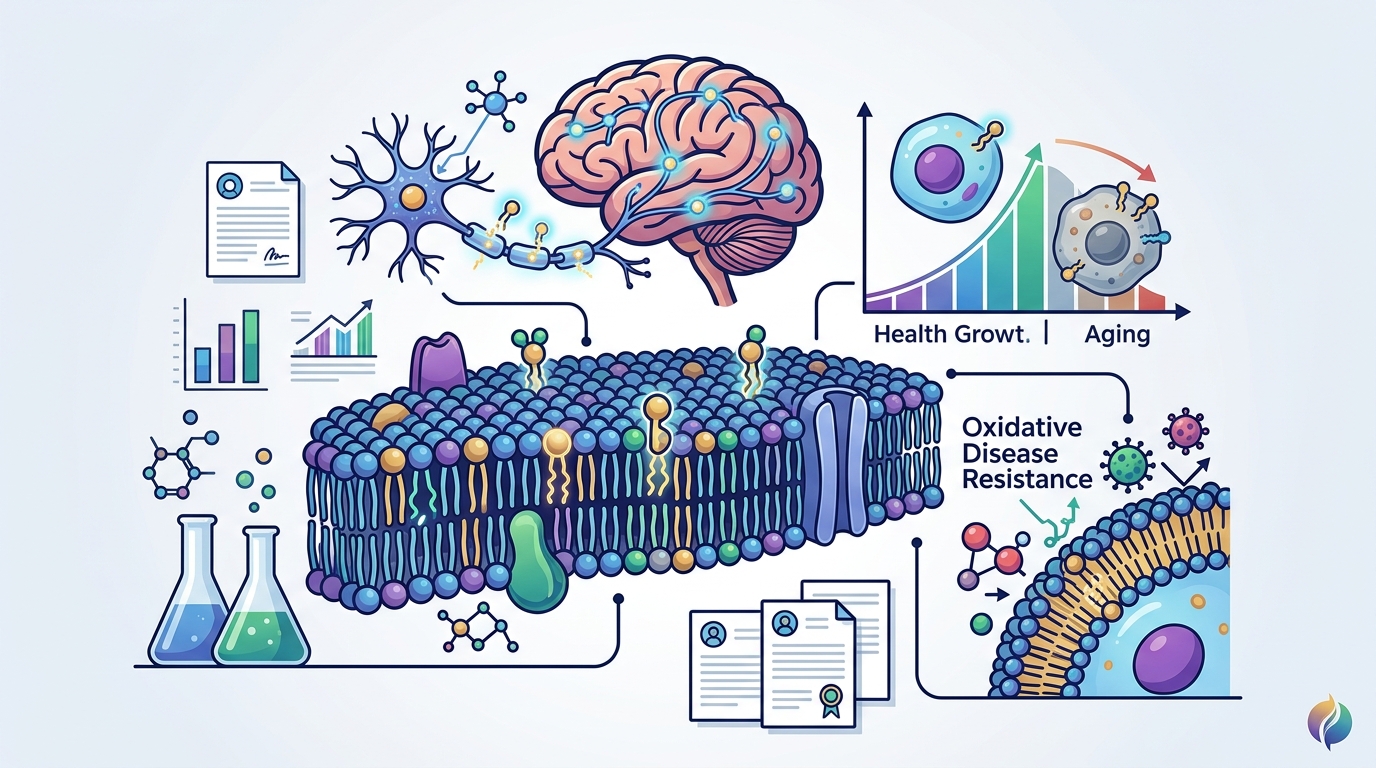
Where Plasmalogens Concentrate in the Body
Plasmalogens are not distributed evenly. They are found in especially high levels in neuronal membranes, with the brain containing the highest concentrations of ethanolamine plasmalogens of any organ. Other tissues with notable plasmalogen enrichment include:
- Heart — cardiac muscle is rich in choline plasmalogens, which support membrane integrity under the relentless mechanical stress of contraction
- White matter and myelin — the myelin sheaths that insulate nerve axons contain extremely high plasmalogen concentrations, critical for efficient nerve signal conduction
- Immune cells — neutrophils and macrophages rely on plasmalogens for membrane remodeling during the inflammatory response
- Skeletal muscle — plasmalogen content in muscle tissue may relate to neuromuscular junction health
This tissue distribution pattern helps explain why plasmalogen deficiency manifests most dramatically in the nervous system and cardiovascular system.
Five Critical Roles Plasmalogens Play
1. Membrane Architecture and Fluidity
The vinyl-ether bond changes how plasmalogen molecules pack within lipid bilayers. Plasmalogens promote tighter packing in certain membrane microdomains (lipid rafts), influencing receptor clustering, ion channel behavior, and vesicle fusion. These specialized lipids affect membrane structure, dynamics, and key cell signaling pathways.
2. Endogenous Antioxidant Defense
As described above, the vinyl-ether bond acts as a sacrificial target for reactive oxygen species. This mechanism is especially important in mitochondria-rich tissues where ROS production is high. Plasmalogens play an important role in lipid membrane organization and function, including acting as endogenous antioxidants.
3. Reservoir for Polyunsaturated Fatty Acids
The sn-2 position of plasmalogens frequently carries docosahexaenoic acid (DHA) or arachidonic acid (AA)—bioactive fatty acids essential for neurotransmission, resolution of inflammation, and retinal function. Decreased blood and brain levels of DHA-containing plasmalogens are associated with decreased cognition and neuromuscular function in humans.
4. Facilitating Membrane Fusion and Vesicle Trafficking
Plasmalogens generate negative membrane curvature, which is physically necessary for the fusion of synaptic vesicles during neurotransmitter release and for intracellular trafficking events. Without adequate plasmalogens, synaptic efficiency may be compromised.
5. Cholesterol Homeostasis
Emerging evidence links plasmalogen levels to cholesterol transport and efflux. Cells with depleted plasmalogens show altered cholesterol distribution, which may contribute to atherosclerotic plaque formation and other lipid-metabolism disorders.
Age-Related Plasmalogen Decline: The Numbers
One of the most clinically relevant features of plasmalogens is their dramatic decline with age. Studies in healthy humans have revealed that plasmalogen levels—including both PlsCho and PlsEtn—drastically decreased by approximately 40% in the elderly (around 70 years old) compared with mid-adulthood (around 30–40 years old). This age-dependent decline is believed to stem from cumulative oxidative stress, reduced peroxisomal activity, and impaired enzymatic remodeling.
The implications are significant: if plasmalogens protect membranes from oxidative damage and support neuronal signaling, a 40% reduction represents a substantial loss of cellular resilience precisely when the body's other repair mechanisms are also waning.
Interestingly, neonates also have statistically significantly lower plasmalogen levels compared to older children, suggesting that plasmalogen status follows a developmental arc—rising during childhood, peaking in early adulthood, and declining thereafter. Research has also revealed that, overall, men exhibit higher levels of ether-linked phospholipids than women, though the clinical significance of this sex difference is still being explored.
Disease Associations: From Alzheimer's to Cancer
Alzheimer's Disease
The link between plasmalogens and Alzheimer's disease (AD) is among the most studied in the field. Reductions of PlsEtn levels have been reported in plasma, serum, cerebrospinal fluid, and brain tissue of AD patients. One landmark study using electrospray ionization mass spectrometry demonstrated a dramatic decrease in plasmalogen content—up to 40 mol%—in white matter at very early stages of AD, with gray matter deficiency correlating to clinical dementia ratings ranging from approximately 10 mol% at very mild dementia to approximately 30 mol% at severe dementia.
These findings suggest that plasmalogen deficiency may play an important role in AD pathogenesis, particularly in white matter, and that altered plasmalogen content may contribute to neurodegeneration, synapse loss, and synaptic dysfunction.
Parkinson's Disease
Similar reductions in plasmalogen levels have been noted in Parkinson's disease. Alterations in these lipids in the brain may contribute to the oxidative stress and neuronal dysfunction characteristic of the condition. Preliminary reports have described improvement of blood plasmalogens and clinical symptoms in Parkinson's patients after oral administration of ether phospholipids.
Cardiovascular Disease
Plasmalogen deficiency is increasingly recognized in the context of cardiovascular risk. Plasmalogen Replacement Therapy (PRT) is a therapeutic approach that aims to address plasmalogen deficiencies in diseases including cardiovascular diseases. Low plasmalogen levels in cardiac tissue may compromise membrane stability and increase susceptibility to ischemic damage.
Cancer
Lipidomics studies have identified altered plasmalogen profiles across multiple cancer types. Plasma plasmalogen profiling of patients with liver, gastric, lung, colorectal, and thyroid cancers revealed that specific PlsEtn species significantly decreased in liver, gastric, lung, and colorectal cancers, with certain species proposed as useful biomarkers for hepatocellular carcinoma.
Peroxisomal Genetic Disorders
Mutations in peroxisomal genes cause severe plasmalogen deficiency from birth. Rhizomelic chondrodysplasia punctata (RCDP) is characterized by mutations in GNPAT, AGPS, PEX7, FAR1, or PEX5. Other rare diseases with reduced plasmalogen levels include cerebral adrenoleukodystrophy, Zellweger syndrome, and infantile Refsum disease—all underscoring how essential intact peroxisomal function is for plasmalogen production.
Plasmalogens as Biomarkers and Therapeutic Targets
Advances in lipidomics and mass spectrometry have transformed plasmalogens from obscure biochemical curiosities into measurable, clinically relevant biomarkers. Plasmalogen deficiency has been observed in various diseases, and plasmalogens have been recognized as not only disease biomarkers but also therapeutic targets.
Blood-based plasmalogen measurement now leverages techniques such as electrospray ionization mass spectrometry (ESI-MS), liquid chromatography-tandem mass spectrometry (LC-MS/MS), and high-resolution platforms including orbitrap and time-of-flight instruments. These assays can quantify individual plasmalogen molecular species with high precision, enabling researchers to identify disease-specific plasmalogen signatures.
The potential for plasmalogens to serve as early-warning biomarkers is especially compelling in neurodegenerative disease, where white matter plasmalogen deficits may precede clinical symptom onset by years.
Can Plasmalogen Levels Be Restored?
The therapeutic potential of plasmalogens attracts increasing interest from both academic researchers and the supplement industry. Several strategies for restoring plasmalogen levels are under investigation:
- Oral plasmalogen supplementation — Studies have demonstrated that blood levels of structurally specific plasmalogen species can be preferentially targeted and modulated through oral supplementation, establishing this as a therapeutically viable approach.
- Precursor supplementation — Providing alkylglycerol precursors (such as batyl alcohol) that can be converted into plasmalogens by the body's own enzymatic machinery
- Nanomedicine delivery — Researchers are exploring nanomedicine applications for treating disorders associated with PUFA-lipid and plasmalogen deficiencies, aiming to improve bioavailability and tissue targeting
- Dietary sources — Certain foods, including shellfish, organ meats, and marine organisms, contain naturally occurring plasmalogens, though concentrations vary widely
While these approaches show promise, further clinical trials are needed to establish definitive efficacy across various health conditions, optimal dosing, and long-term safety profiles.
Key Takeaways
- Plasmalogens are vinyl-ether phospholipids constituting 15–20% of membrane phospholipids in human tissues
- Their biosynthesis begins in the peroxisome and requires functional GNPAT, AGPS, FAR1, and PEX7 enzymes
- The vinyl-ether bond acts as a sacrificial antioxidant, protecting neighboring membrane components from oxidative damage
- Plasmalogen levels decline by roughly 40% between mid-adulthood and age 70
- Deficiency is associated with Alzheimer's disease, Parkinson's disease, cardiovascular disease, multiple cancer types, and genetic peroxisomal disorders
- Lipidomics-based measurement enables plasmalogen profiling as a biomarker for disease risk and progression
- Oral supplementation and nanomedicine represent emerging strategies for restoring plasmalogen levels
Frequently Asked Questions
What are plasmalogens made of?
Plasmalogens are glycerophospholipids with a glycerol backbone, a vinyl-ether-linked alkyl chain at the sn-1 position, a polyunsaturated fatty acid (often DHA or arachidonic acid) at sn-2, and a headgroup—typically ethanolamine or choline—at sn-3. The vinyl-ether bond is what distinguishes them from other phospholipids.
Why do plasmalogen levels drop with age?
The age-related decline in plasmalogens is attributed to cumulative oxidative stress, reduced peroxisomal activity, and impaired enzymatic remodeling. Because peroxisomes are required for the first steps of plasmalogen synthesis, any decline in peroxisomal function directly limits the body's ability to replenish these lipids.
Are plasmalogens linked to Alzheimer's disease?
Yes. Multiple studies have documented reduced plasmalogen levels in the plasma, cerebrospinal fluid, and brain tissue of Alzheimer's patients. White matter plasmalogen content can drop by up to 40% even at the very mild dementia stage. Whether this deficiency is a cause or consequence of the disease is still under investigation.
Can you increase plasmalogen levels through diet or supplements?
Research indicates that oral plasmalogen supplementation can raise blood levels of specific plasmalogen species. Dietary sources such as shellfish and organ meats also provide naturally occurring plasmalogens. However, clinical trials are still needed to determine optimal dosing and long-term efficacy for specific health conditions.
How are plasmalogen levels measured?
Plasmalogen levels are measured using mass spectrometry techniques—most commonly electrospray ionization mass spectrometry (ESI-MS) or liquid chromatography-tandem mass spectrometry (LC-MS/MS). These methods can quantify individual plasmalogen molecular species from blood samples with high precision.
What happens when plasmalogens are completely absent?
Complete or near-complete absence of plasmalogens occurs in rare genetic disorders such as rhizomelic chondrodysplasia punctata (RCDP), caused by mutations in peroxisomal enzymes. These conditions are characterized by severe skeletal abnormalities, intellectual disability, cataracts, and significantly shortened lifespan—illustrating how essential plasmalogens are for normal development.