

How Do Plasmalogen Levels Change With Age? The Science Behind Lipid Decline
Plasmalogens are specialized phospholipids that make up a significant portion of cell membranes, particularly in the brain, heart, and immune cells. As we age, these critical lipids diminish—setting the stage for cognitive decline, neurodegeneration, and systemic vulnerability. This guide explains exactly how, when, and why plasmalogen levels drop, what the research says, and what you can do about it.
What Are Plasmalogens?
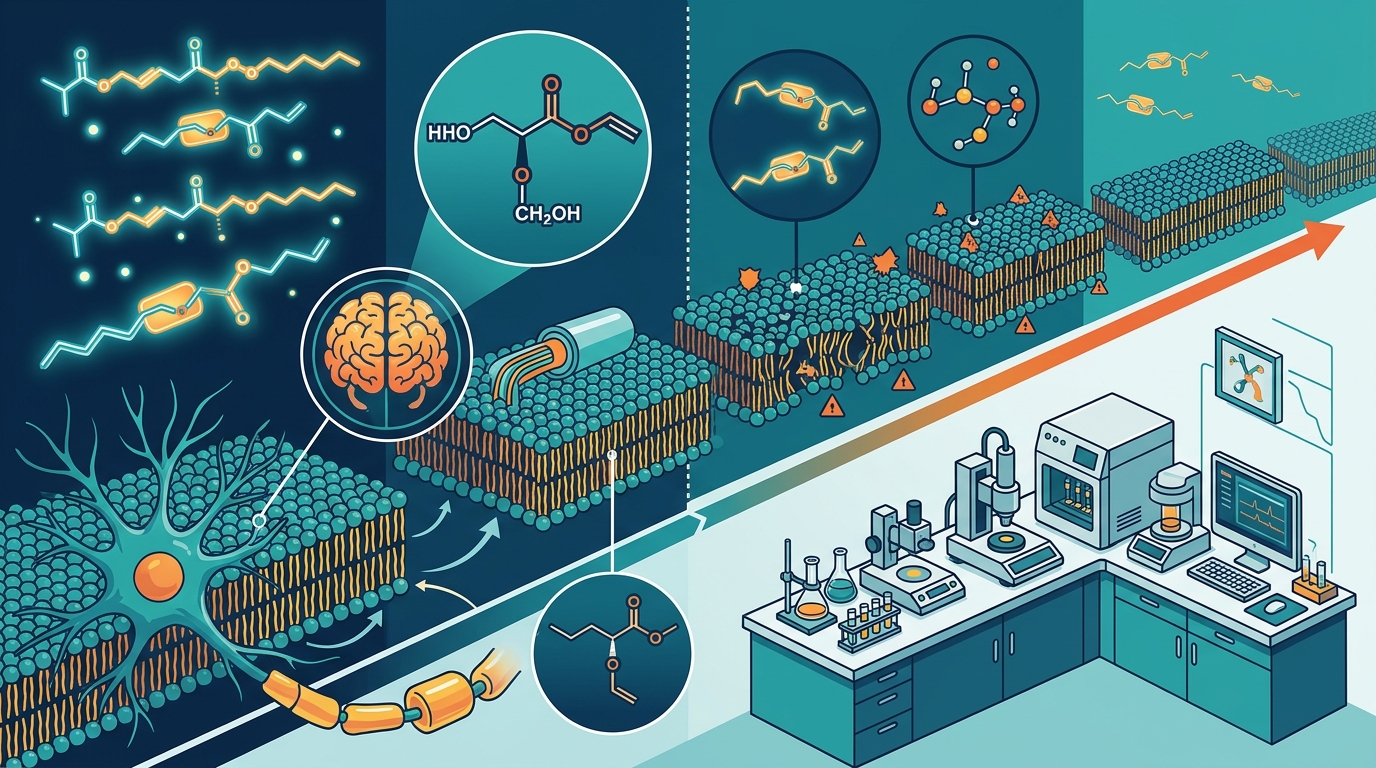
Plasmalogens are a unique subclass of glycerophospholipids distinguished by a vinyl-ether bond at the sn-1 position of the glycerol backbone. They account for roughly 15–20 mol% of the total phospholipid content in human tissues, with particularly high concentrations in the brain, heart, lungs, and kidneys.
Structurally, plasmalogens often carry a polyunsaturated fatty acid (PUFA)—such as DHA or arachidonic acid—at the sn-2 position. This combination gives them several critical roles: maintaining membrane fluidity, facilitating vesicle fusion and neurotransmitter release, scavenging reactive oxygen species (ROS), and supporting cholesterol transport.
The two primary classes are ethanolamine plasmalogens (PlsEtn) and choline plasmalogens (PlsCho). In the brain, PlsEtn predominates and is essential for myelin integrity and synaptic function.
Three Mechanisms Driving Plasmalogen Loss
1. Declining Peroxisomal Function
Plasmalogens are synthesized exclusively in peroxisomes—membrane-bound organelles responsible for fatty acid oxidation and detoxification. Peroxisomal efficiency declines with age, reducing the body's capacity to produce new plasmalogens. Because there is no alternative biosynthetic pathway, any drop in peroxisomal output translates directly into lower systemic plasmalogen levels.
2. Increased Oxidative Consumption
Plasmalogens act as sacrificial antioxidants. Their vinyl-ether bond reacts preferentially with free radicals, protecting adjacent membrane lipids and proteins. As oxidative stress rises during aging, existing plasmalogens are consumed at a faster rate—widening the deficit with each passing decade.
3. Chronic Inflammatory Feedback
Chronic low-grade inflammation—sometimes called “inflammaging”—amplifies oxidative load and accelerates plasmalogen degradation. Lower plasmalogen levels, in turn, reduce the membrane's antioxidant shield, leading to even more oxidative damage. This self-reinforcing loop makes plasmalogen depletion progressively harder to reverse without intervention.
Impact on the Brain: From Myelin to Memory
The brain is one of the most plasmalogen-rich organs in the body. Its white matter—the myelin-coated nerve fibers that enable fast signal transmission—depends heavily on PlsEtn to maintain structural integrity. When plasmalogen levels fall, myelin quality degrades, slowing neural communication and increasing vulnerability to inflammatory damage.
At the synaptic level, proper membrane fluidity is essential for vesicle formation and neurotransmitter release. Research has shown that plasmalogen-deficient cells exhibit decreased transmembrane protein function and impaired membrane-related cholesterol transport, both of which compromise neuronal signaling.
Animal studies have provided compelling evidence of reversibility. A 2022 study published in Frontiers in Molecular Biosciences demonstrated that ascidian-derived plasmalogen supplementation promoted synaptic plasticity and neurogenesis while inhibiting age-related microglia-mediated neuroinflammation in naturally aging mice.
Disease Connections: Alzheimer's, Parkinson's, and Beyond
Alzheimer's Disease
The link between plasmalogen deficiency and Alzheimer's disease (AD) is among the most heavily studied. A landmark study by Han, Holtzman, and McKeel (2001) in the Journal of Neurochemistry reported a dramatic decrease in plasmalogen content—up to 40 mol% of total plasmalogen—in white matter at a very early clinical stage of AD (CDR 0.5). Gray matter deficiency correlated progressively with disease severity, ranging from approximately 10 mol% at very mild dementia to 30 mol% at severe dementia.
Research across five independent populations has confirmed significant reductions in blood plasmalogens in dementia patients compared to controls, with depletion severity correlating with disease severity. Circulating PlsEtn levels containing DHA or arachidonic acid have been associated with the degree of cognitive dysfunction.
Parkinson's Disease and Other Conditions
While the Alzheimer's link is the strongest, plasmalogen deficiency has been observed across multiple neurodegenerative conditions. This broader pattern suggests that plasmalogen loss may represent a shared vulnerability pathway rather than being specific to any single disease.
Measuring Plasmalogen Levels: Biomarkers and Lipidomics
Advances in mass spectrometry—including electrospray ionization (ESI/MS), time-of-flight, and triple quadrupole platforms—have made it possible to quantify plasmalogen species in blood with high precision. Serum PlsEtn concentrations correlate with brain levels, making a simple blood draw an effective proxy for central nervous system status.
The plasmalogen index—a ratio of plasmalogen to phosphatidyl species—has emerged as a promising predictive metric. Longitudinal research has shown that a declining plasmalogen index is associated with higher odds of converting from normal cognition to mild cognitive impairment or Alzheimer's disease, while a higher baseline index is protective.
Commercially available plasmalogen testing is now offered through specialized laboratories, enabling clinicians to identify deficiency early and track changes over time. This represents a significant step forward in personalized lipid-based health assessment.
Plasmalogen Levels and Longevity: The Rush University Data
Some of the most striking longevity data comes from the Rush University Memory and Aging Project. According to published findings, a 95-year-old with high plasmalogen levels had the same five-year mortality risk as a 65-year-old with low plasmalogen levels—a 30-year biological age difference driven by a single lipid class.
Even more remarkable, a 95-year-old with high plasmalogen levels had nearly a 70% chance of reaching their 100th birthday, compared to less than 20% for a same-age individual with low levels. These findings position plasmalogens not merely as disease markers but as quantifiable predictors of biological resilience and lifespan.
Strategies to Support Plasmalogen Levels
Dietary Approaches
Plasmalogens occur naturally in animal-derived foods, particularly shellfish (scallops, mussels), organ meats, and certain marine oils. Diets rich in omega-3 PUFAs may also support the raw materials needed for plasmalogen biosynthesis. Maintaining adequate DHA intake is especially important given that DHA-containing PlsEtn is the most vulnerable to age-related depletion in the brain.
Targeted Supplementation
Direct plasmalogen supplements—often derived from scallops or ascidians (sea squirts)—are available and have been evaluated in clinical contexts. A double-blind, placebo-controlled trial showed that two-month plasmalogen supplementation significantly improved memory measures in people with Alzheimer's and mild cognitive impairment, with particular benefits in women and patients under age 77.
Supporting Peroxisomal Health
Because peroxisomes are the sole site of plasmalogen production, strategies that support peroxisomal function may help sustain endogenous synthesis. Regular physical activity, adequate sleep, caloric moderation, and minimizing chronic inflammation through diet and lifestyle are all associated with healthier peroxisomal activity.
Reducing Oxidative Load
Since plasmalogens are consumed by oxidative stress, reducing total oxidative burden helps preserve existing levels. Antioxidant-rich diets, stress management, avoidance of environmental toxins, and consistent exercise all contribute to a less oxidatively demanding internal environment.
Key Takeaways
- Plasmalogen levels decline measurably with age, with accelerated loss beginning around age 50.
- The decline is driven by three interconnected mechanisms: reduced peroxisomal biosynthesis, increased oxidative consumption, and chronic inflammatory feedback loops.
- Brain tissue is especially vulnerable; white matter plasmalogen content can drop by up to 40 mol% in early-stage Alzheimer's disease.
- Plasmalogen decline may precede clinical symptoms of dementia by up to seven years, making it a valuable early biomarker.
- Data from the Rush University Memory and Aging Project links high plasmalogen levels to dramatically improved survival, even at advanced ages.
- Dietary strategies, targeted supplementation, and lifestyle interventions that support peroxisomal health can help maintain or restore plasmalogen levels.
Frequently Asked Questions
At what age do plasmalogen levels start declining?
Serum plasmalogen levels show negative correlations with age in healthy adults, with more pronounced declines typically observed after age 50. However, individuals with genetic risk factors—such as the ApoE ε4 allele—may experience earlier decreases. Measurable drops can precede neurodegenerative symptoms by years.
Can you test your plasmalogen levels?
Yes. Specialized lipidomic panels using mass spectrometry can quantify plasmalogen species from a standard blood draw. Serum ethanolamine plasmalogen levels correlate with brain levels, making blood testing an accessible proxy for central nervous system status. Several laboratories now offer commercial plasmalogen testing.
Do low plasmalogen levels cause Alzheimer's disease?
The relationship between plasmalogen deficiency and Alzheimer's is well-documented but causality has not been definitively established. Research shows that plasmalogen depletion begins years before clinical Alzheimer's symptoms appear and correlates with disease severity. Whether this decline is a cause, a contributing factor, or a consequence of the disease process remains an active area of investigation.
Can plasmalogen supplements reverse age-related decline?
Clinical trials in humans have shown promising results, particularly for memory improvement in individuals with mild cognitive impairment. Animal studies have demonstrated that plasmalogen supplementation can promote neurogenesis, reduce neuroinflammation, and improve synaptic plasticity in aging mice. However, larger and longer human trials are still needed.
What foods contain plasmalogens?
Plasmalogens are found in animal-sourced foods, with particularly high concentrations in shellfish such as scallops and mussels, as well as organ meats like liver and heart. Marine-derived oils and certain fermented foods also contain measurable amounts. Diets rich in omega-3 fatty acids may further support endogenous plasmalogen production.
Are plasmalogen levels linked to lifespan?
Data from the Rush University Memory and Aging Project suggests a strong association. Older adults with high plasmalogen levels demonstrated significantly better survival rates compared to same-age peers with low levels, with the biological age difference estimated at approximately 30 years.